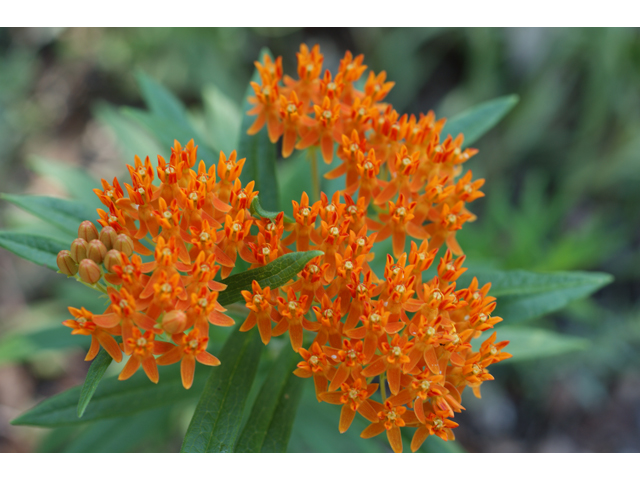
- Botanical name: Asclepias tuberosa
- Other common names: Butterfly weed
- Light: full sun, part shade
- Water needs: low, medium
- Soil: clay, loam, sand
- Height: 1 – 2 ft
- Bloom: June – August
- Sociability rating: 1
- Wildlife value: Monarch butterfly host, bees, butterflies, hummingbirds
Butterfly milkweed is an upright native perennial with narrow, lance-shaped leaves and flat-topped clusters of bright orange to yellow-orange flowers, typically 2–5 inches across. It is the shortest commonly available milkweed in our area.
It blooms throughout summer and makes a good cut flower. Bees, butterflies, and hummingbirds all visit the flowers. It is a larval host plant for the Monarch butterfly, gray hairstreak, and queen butterfly. Unlike other milkweeds, this species has clear rather than milky sap.
It thrives in full sun and well-drained soils, including dry, rocky, or sandy conditions, making it a solid choice for south facing, baking-in-the-sun gardens. Deer resistant and drought tolerant once established. Note that the sap can cause skin irritation, so gloves are a good idea when handling it.
Spreading Notes: Will self-seed over time in low competition settings
Maintenance Notes: None required. Milkweed is cold-intolerant, so it will be one of the first to die back in the fall, and last to emerge in the Spring