
Hello Wild Ones! The Mt. Cuba Center released the results of their multi-year trial of solidago for the mid-atlantic region this week.
If you’re unfamiliar with these trials, or the Mt. Cuba Center, we encourage you to visit their website and read up in depth on all the great information they have about native plants. To put it briefly, one of the things they do is run plant trials to measure the success of a native plant in a garden setting with little maintenance (they typically only water a plant in its first year to help get established). They look at things like a plant’s growth habit, floral display, disease resistance, and many other factors, including pollinator activity.
While the conditions of the mid-atlantic are not the exact same as ours here in the Tennessee Valley, it’s close enough that we are still able to learn a great deal of information about how these plants might behave in our yards and gardens. It should be noted that some of the species in the trial are not native to our region (especially many of the coastal plain species), so keep that in mind. You can refer to http://bonap.org/ or https://fsus.ncbg.unc.edu/ if you would like to check a plant’s native range.
—
This year’s trial is all about solidago, or Goldenrod, as we know it. While many people are familiar with the common species of Goldenrod that we see along roadsides and in old fields, it’s easy to assume that the those masses of yellow would be too aggressive for a home garden, so this trial does a great job of highlighting the many species that may be less commonly seen in our day-to-day.
Be sure to read the full report in the link above, as that has an informative breakdown of all the factors looked at in the trial.
Here are a few noteworthy species that are native to our region.
Solidago caesia
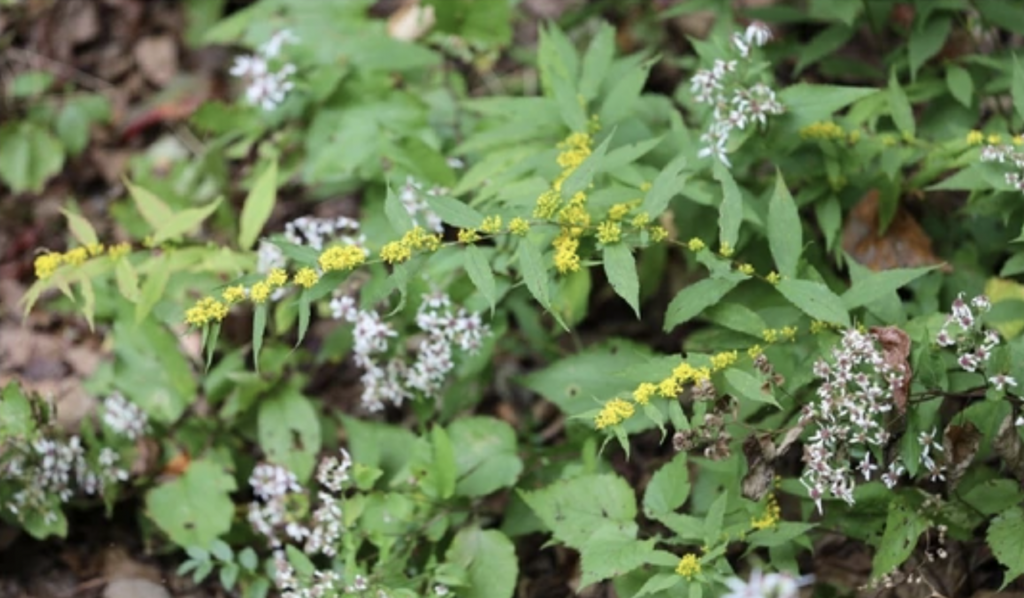
Solidago caesia (blue-stemmed goldenrod) is notably absent from the trial, which is mentioned in their full report as it did not survive the trial, but they say this is likely due to it being grown in full sun for the trial, and the plant is much better served in a dry, shaded garden. It’s a very common species found here in our woodlands, and is becoming more common in garden settings because of its shade tolerance and its ability to play well with others.
Solidago sphacelata
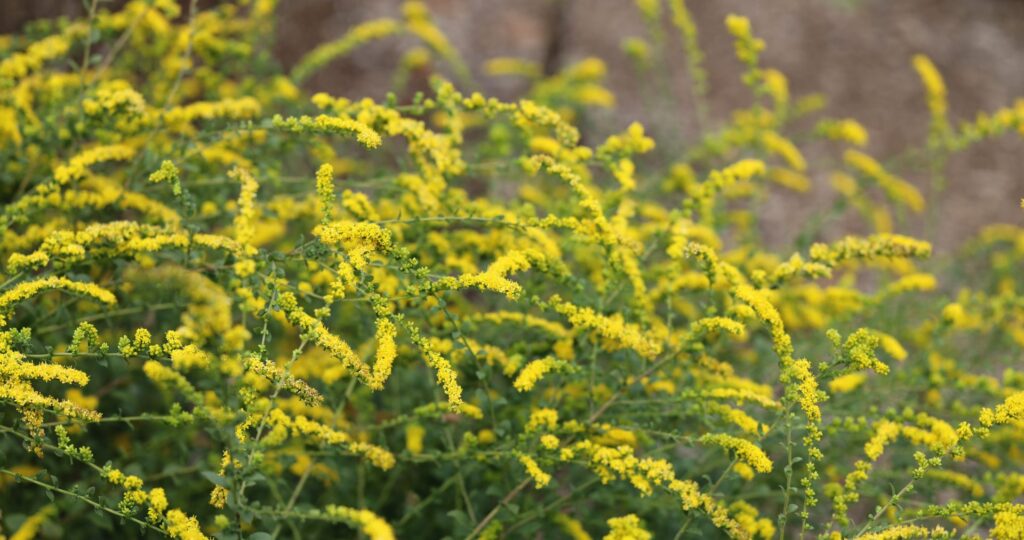
Solidago sphacelata (autumn goldenrod) is one to be on the lookout for. Outside of the ‘Golden Fleece’ cultivar, it’s very difficult to find in nurseries, but after this trial, it should be expected that this species will gain popularity. The main reason for mentioning this species, outside of its excellent trial score, is that it’s one of the more endemic species to our area. Its main habitat is rocky, open, calcium rich forests, which are common in our region. Be sure to look for it on your next hike!
Solidago speciosa
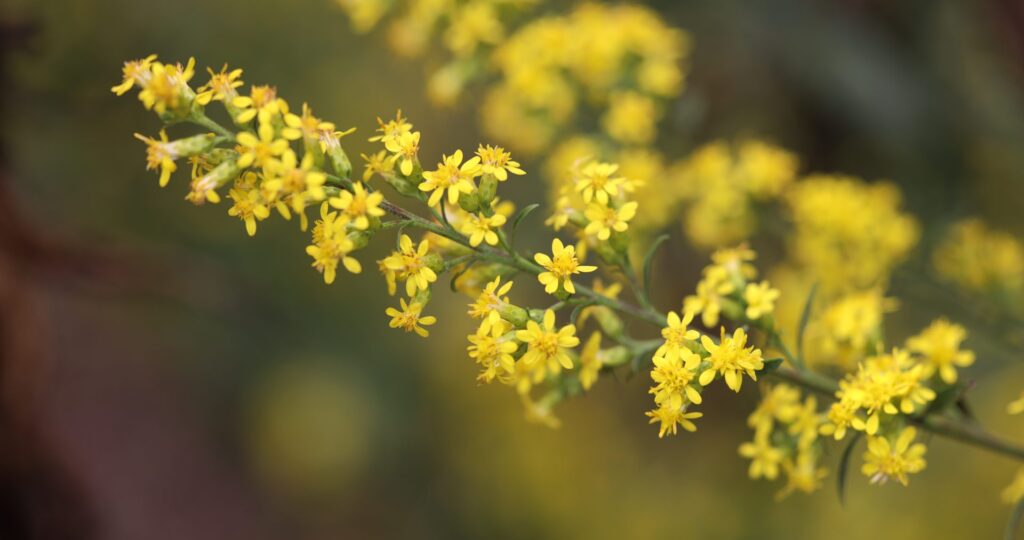
Solidago speciosa (showy goldenrod) was another surprisingly poor performer that is very popular in gardens and relatively easy to find. They did once again mention that its poor performance is likely more to do with the growing conditions of the site, but it’s worth mentioning as it was one of the top performers in terms of pollinator activity, so it’s an all around great option if you are looking for a goldenrod that is easy to find, and attracts some of the highest number of pollinators, while being beautiful, so long as you have the right growing conditions.
—
Overall, these trials are meant to be informative, not a strict guide on what to plant. It’s always best to choose plants that are native to your region, and also that are fitting for the conditions of your site. No matter what your conditions are, there is a goldenrod for you. The solidago genera is considered a keystone plant in our region, so if you don’t already have some, please consider adding it to your yard or garden!
And lastly, if you want to know more about this trial, the Native Plants, Healthy Planet podcast has an episode with Sam Hoadley who worked on the trial that is a great listen!
Some other Mt. Cuba Center trials to check out:
- https://mtcubacenter.org/trials/vernonia/
- https://mtcubacenter.org/trials/carex-for-the-mid-atlantic-region/
All photo credits (including header photo) to the Mt. Cuba Center.