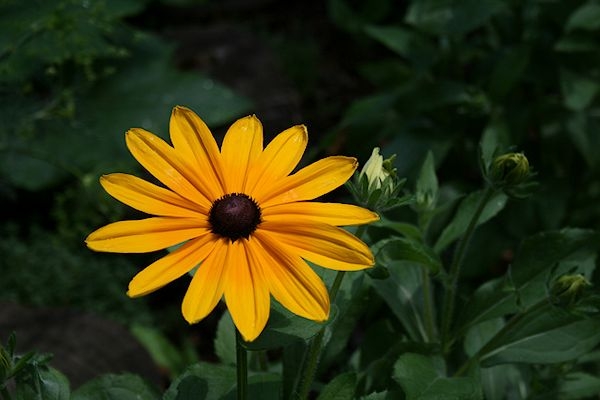
- Botanical name: Rudbeckia fulgida
- Light: full sun, part shade
- Water needs: low, medium
- Soil: clay, loam, sand, gravel
- Height: 2 – 3 ft
- Bloom: July – August
- Sociability: 2
- Wildlife Value: Pollinators, seeds loved by birds
Also referred to as a black-eyed Susan, this is an easy-to-grow plant in most garden conditions as long as the soils don’t stay wet. Often confused with two other species, the Rudbeckia hirta (a biennial, typically also referred to as a “black-eyed Susan”) and Rudbeckia triloba (another perennial called a brown-eyed Susan), the orange coneflower has cheerful yellow flowers with brownish-black centers. Birds love to eat the seeds as well.
Spreading Notes: Will self seed over time and also slowly form a clump
Maintenance Notes: Stems can be cut back to 18 – 24 inches in the winter to provide habitat for bees, after birds have picked the seed heads clean
Sources: https://plants.ces.ncsu.edu/, https://www.wildflower.org/plants/, https://www.missouribotanicalgarden.org/PlantFinder/plantfindersearch.aspx