- Botanical name: Echinacea purpurea
- Other common names: Eastern purple coneflower
- Light: full sun, part shade
- Water needs: low, medium
- Soil: clay, loam, sand
- Height: 2 – 4 ft
- Bloom: June – August
- Sociability rating: 2
- Wildlife value: Bees, butterflies, hummingbirds, goldfinches, wavy-lined emerald butterfly host, silvery checkerspot butterfly host
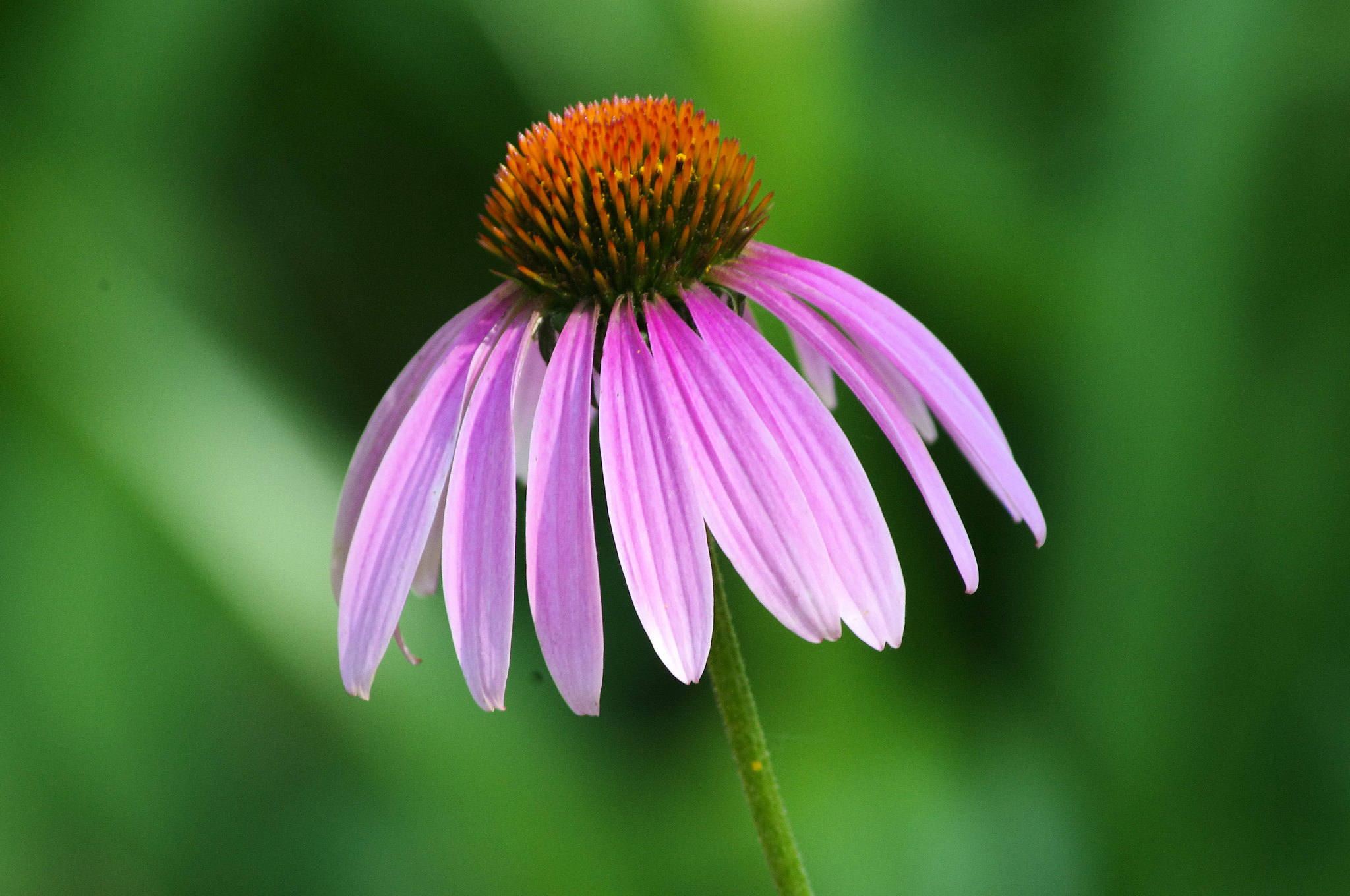
Purple coneflower is an herbaceous perennial with dark green leaves and showy purple flowers. Flowers typically reach 3-5 inches across and bloom reliably throughout summer.
This is one of the most popular and adaptable native perennials. It thrives in full sun and tolerates a wide range of well-drained soils, from dry rocky areas to moist garden beds. Once established, it’s highly drought tolerant and handles heat, humidity, and even clay soils with ease.
Purple coneflower is a pollinator powerhouse. Bees and butterflies are drawn to the nectar-rich blooms, and it serves as a larval host for wavy-lined emerald and silvery checkerspot butterflies. The seed heads persist through winter, providing food for goldfinches and other seed-eating birds. Deer resistant. Leave the stems standing after bloom—native bees nest in the hollow stems.
It freely self-seeds if you leave some flower heads in place, making it perfect for naturalizing in meadows or prairie gardens. Note that purple coneflower can be susceptible to aster yellows disease and occasionally attracts Japanese beetles.
Sources: https://plants.ces.ncsu.edu/, https://www.wildflower.org/plants/, https://www.missouribotanicalgarden.org/PlantFinder/plantfindersearch.aspx